
Introducing the new Valuable Content Principles
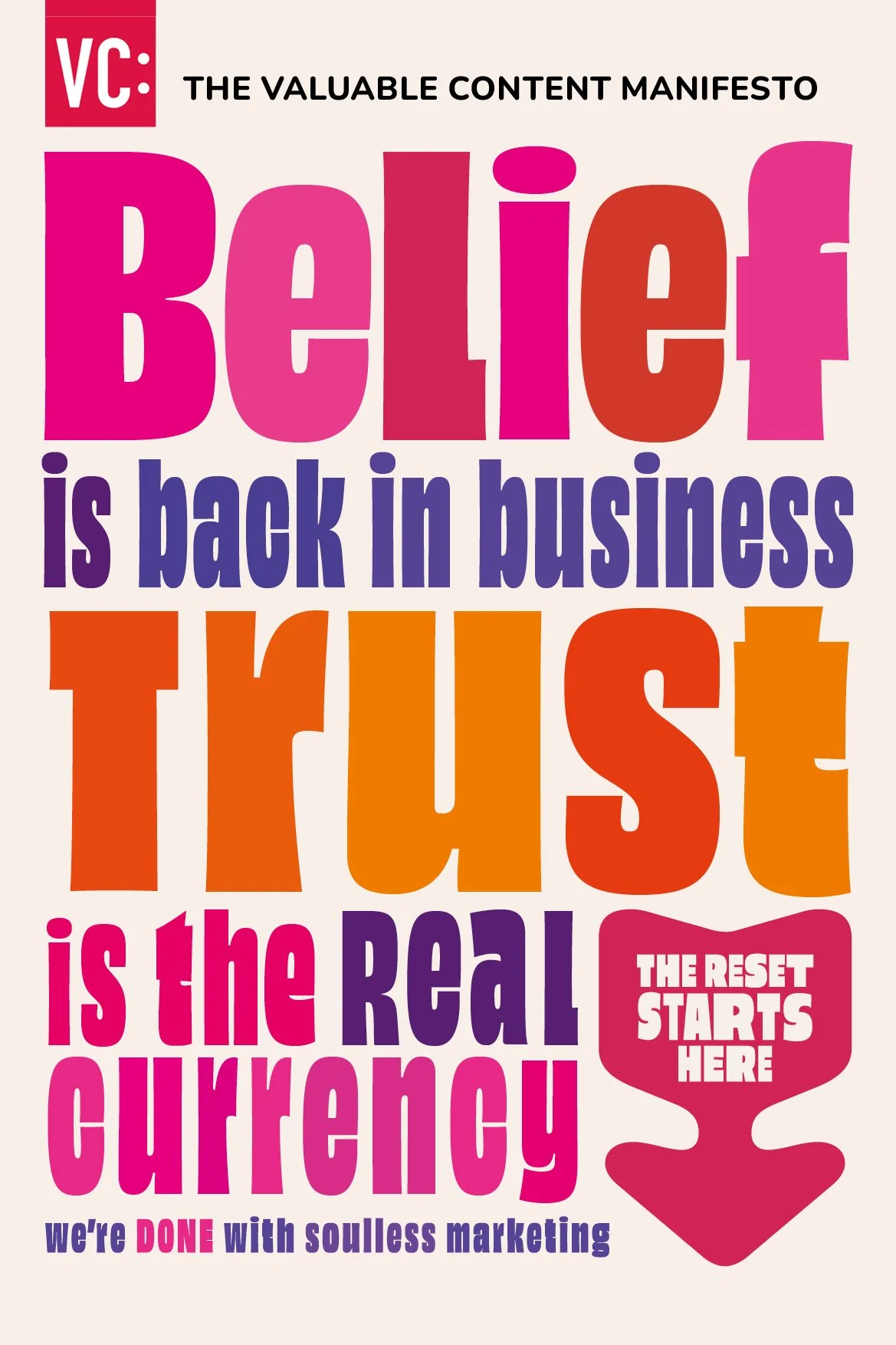
A communications manifesto for more clarity, trust and humanity in the age of AI
13 years ago, Sharon Tanton and I sat down to write the original Valuable Content principles as the core of our book, Valuable Content Marketing.
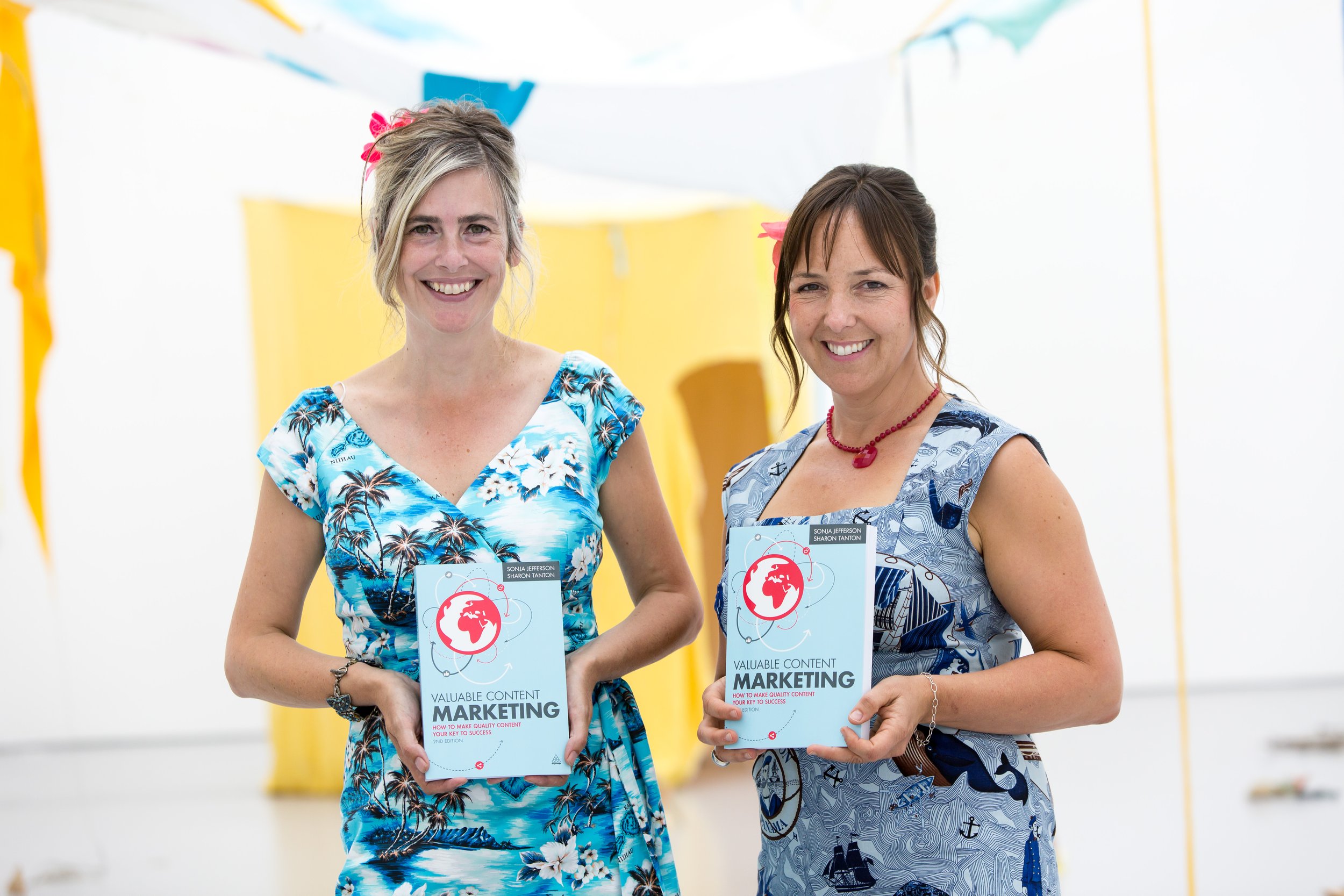
Sharon and me at the book launch party
At the time, the internet felt full of possibility.
Blogging was taking off. Social media still felt social. Twitter was an actual joy (yes, honestly). There was this exciting sense that businesses, charities and creative people could finally connect directly with the people they cared about, without having to shout or sell their souls in the process.
We wanted to help good people promote good work in a way that felt natural, human and effective. So we wrote the book and the principles as a bit of a fuck you to overly-salesy, interruption-driven marketing:
Put your customers first
Help, don’t sell
Be generous
Tell a good story
Commit to quality
Write from the heart 💕
The key was to continually deliver value for the people you chose to serve.

The original Valuable Content principles
It worked a treat.
The Valuable Content method and principles spread around the world. They helped our business and they helped lots of other people too. Businesses and charities grew. Opportunities materialised. Marketing started to feel a whole lot less grim and more rewarding.
But, what is valuable content now?
A decade + on and the world feels different.
AI-generated content is flooding every platform. Algorithms reward outrage and volume. Social media feels engineered for attention, not relationships. “Useful content” has become industrialised and in some cases weaponised to exploit our attention and manipulate behaviour.
Sharon and I walked and talked and wondered if we were alone in our feelings of disquiet about the state of it all.
So last year we decided to go back to the drawing board.
We did some research [see: The Absolute State of Marketing & Promotion].
Many of the marketers, founders, freelancers and communicators we spoke to told us they felt exhausted, overwhelmed, unsure what works anymore, and in some cases disconnected from the meaning of the work itself.
We started asking ourselves a big question:
What is valuable content now?
And perhaps more importantly:
How do we communicate in a way that cuts through and still feels human?
We revisited the original principles, kept what still felt true, changed what didn’t. And reframed them for the world we’re actually living and working in now.
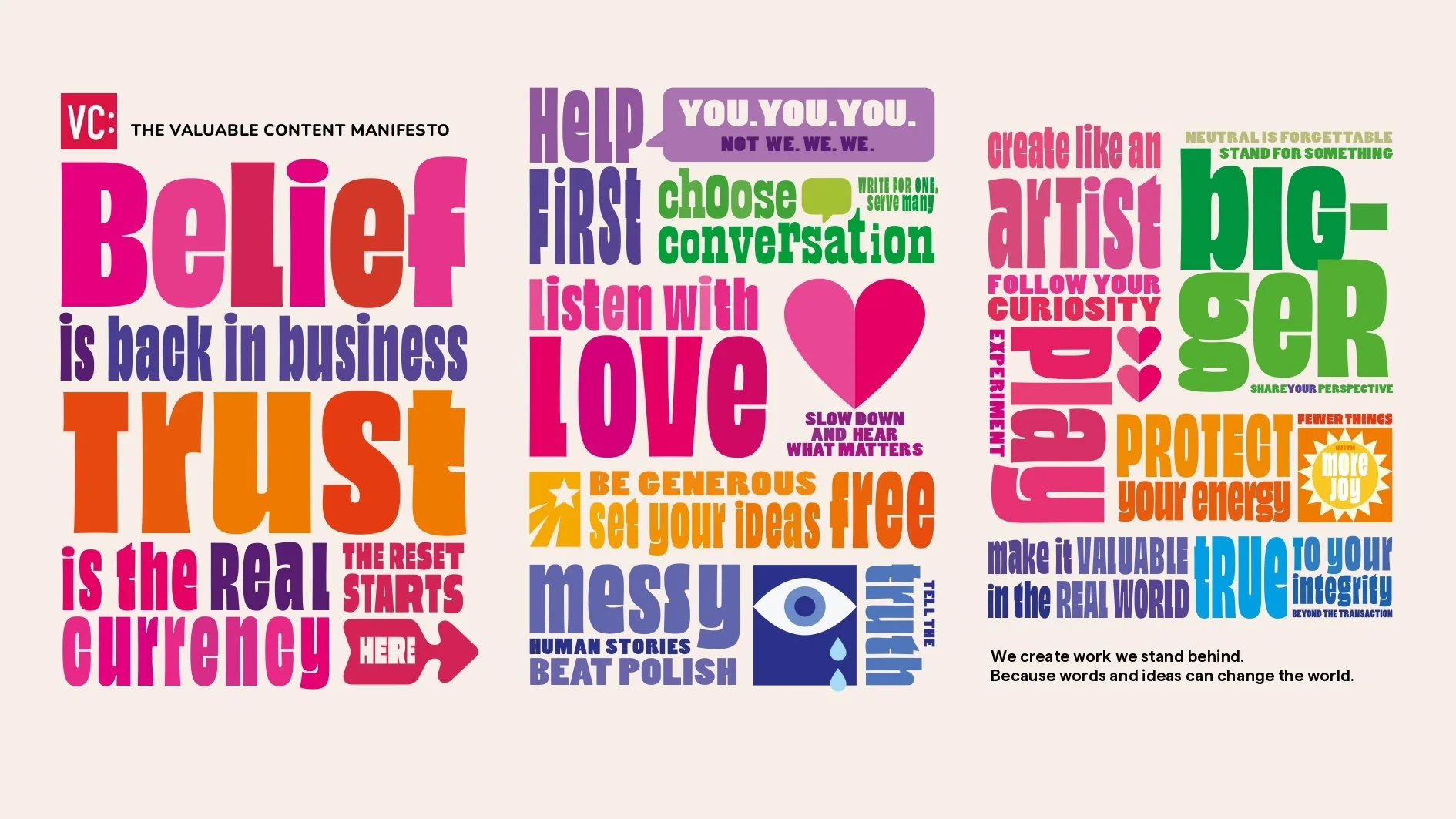
The new Valuable Content principles
The new principles
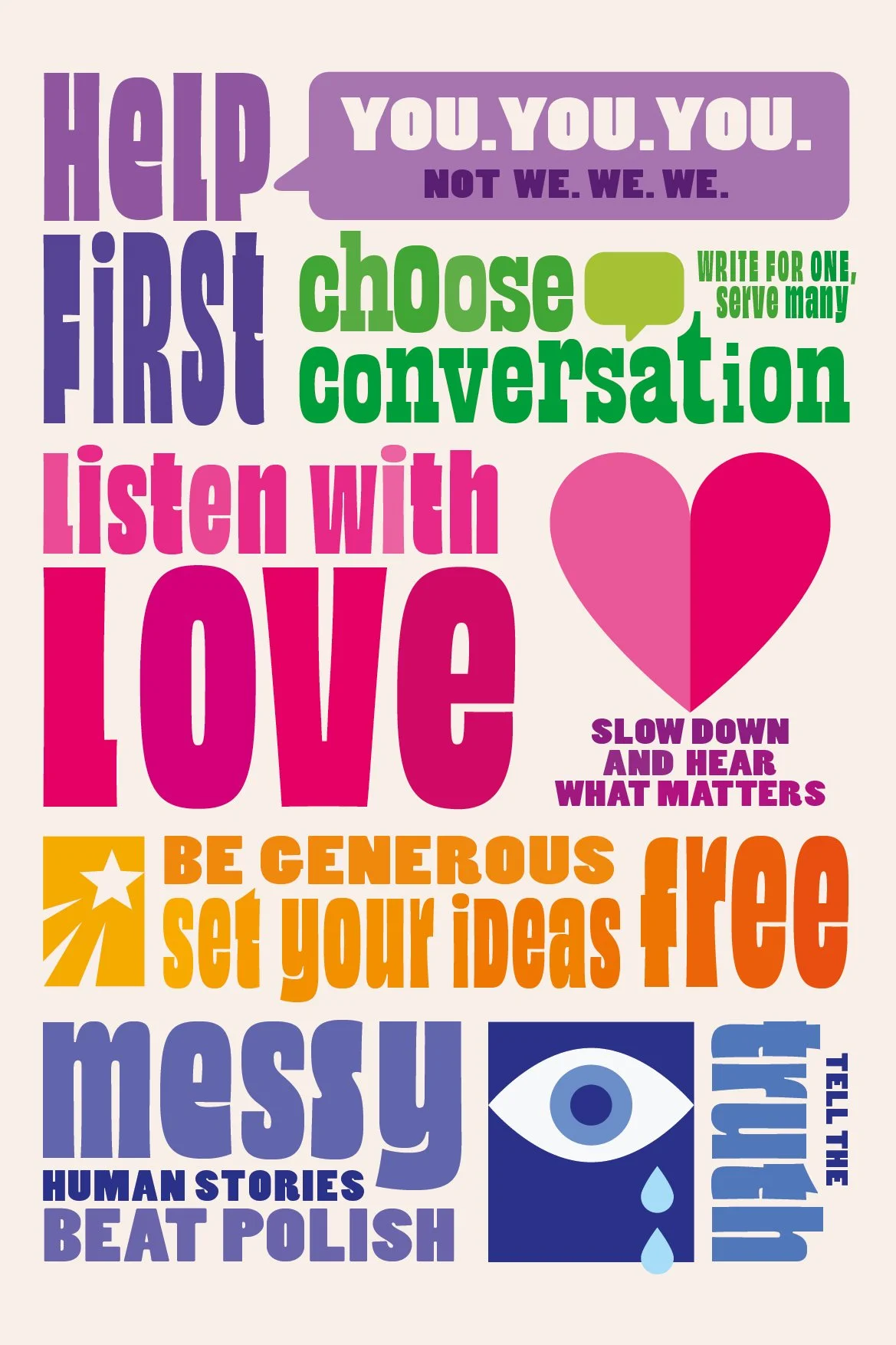
Help first: you, you, you not we, we, we
Listen with love: slow down and hear what matters
Choose conversation: write for one, serve many
Be generous: set your ideas free
Tell the truth: messy human stories beat polish
Stand for something bigger: share your perspective
Create like an artist: follow your curiosity, experiment, play
Protect your energy: fewer things, more joy
Make it valuable in the real world: true to your integrity
What stays, what’s new?
Some things, we realised, matter more than ever.
Helping first and foremost. Leaving ego aside and putting the focus on the people we serve. Their needs, not our own. Because the best marketing and communication is never really about us.
Generosity too. Not as a cynical tactic or “funnel strategy”, but as a genuine intention Sharing ideas, insight and care freely, because it might actually help someone.
But there were things we realised needed more emphasis if we’re going to cut through today.
Listening, for one. Real listening. Deep listening. Slowing down enough to properly understand the people we serve: their fears, frustrations, hopes, language and lives. Great communication comes from deep understanding and empathy, now more than ever.
The courage to share your perspective. To stand for something. To say something meaningful.
And stories. Not the polished brand narrative variety, but messy human stories. Real ones. Honest ones. The kind that remind us there are actual people involved.
These always hit home hardest. In a world full of content, much of it automated, generic and created at speed, genuine unvarnished humanity stands out.
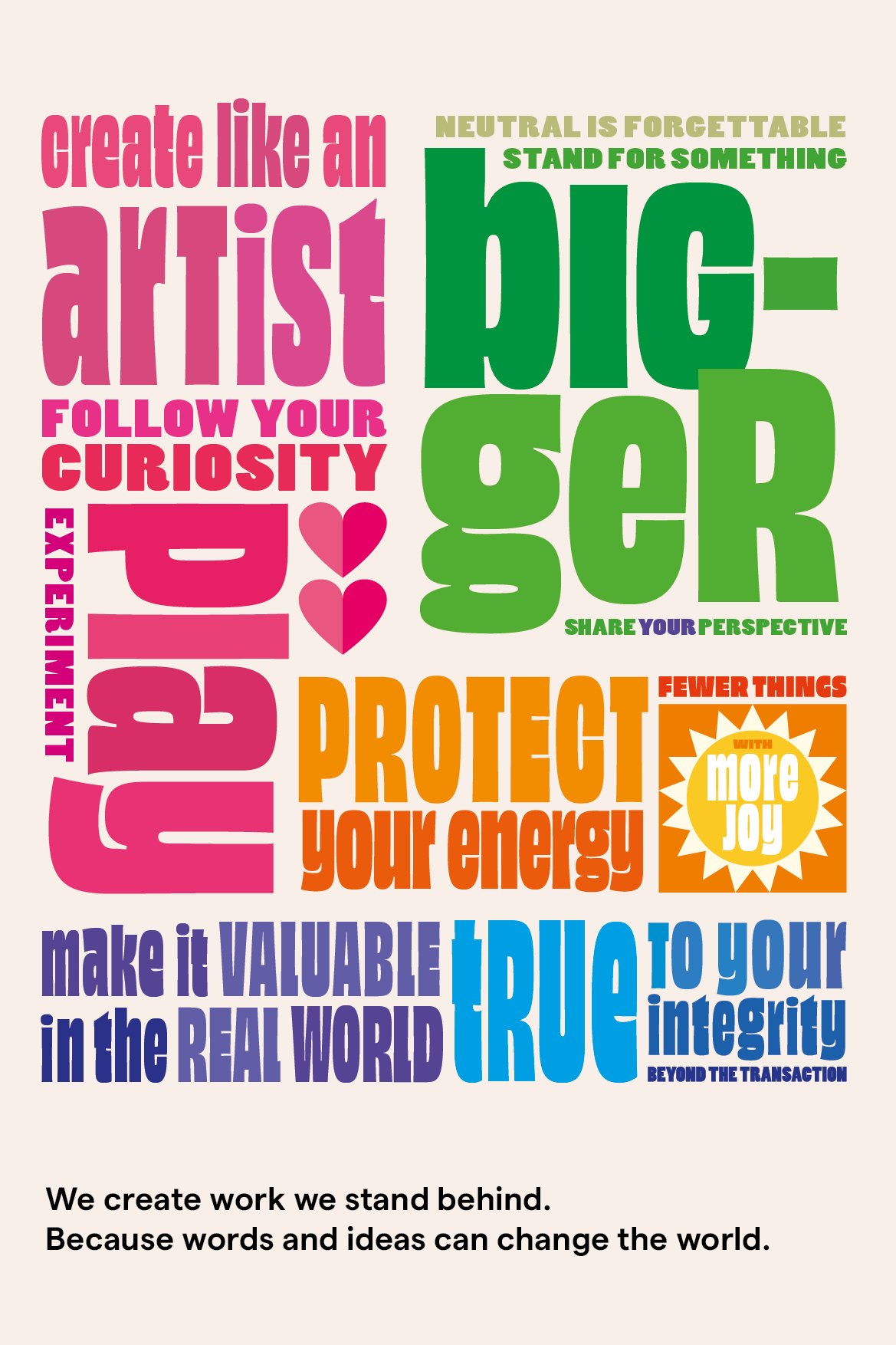
We also found ourselves thinking more about creativity. Not just content quality and consistency, but art. Curiosity. Playfulness. Experimentation. Joy. The internet doesn’t need more same-old “meh” content sludge. It needs more bravery and aliveness.
And perhaps most importantly of all, we realised we needed to protect ourselves too.
As our research found, this work asks a lot of us communicators. We talk about helping, about giving generously, but not at the expense of yourself.
The options are endless now: platforms, formats, channels, algorithms, the constant pressure to produce. But more doesn’t necessarily equal impact.
Do the things that matter. Use the platforms you genuinely enjoy. Create the work you can put real energy into, not everything, everywhere all at once.
Because when your energy is right, your work lands differently. And when it isn’t, people feel that too.
A strategy of care
At the heart of all of this is something simple: care.
In a world flooded with AI-generated content and endless persuasion tactics, people are craving something created with genuine feeling behind it. Communications with integrity from people who have our best interests at heart.
Because trust is the real currency now. And trust comes from belief.
Belief in what you do. Belief in what you’re saying. Belief in your intentions – that communication can still be an act of care and service. People feel and respond to that.
Listening.
Empathy.
Curiosity.
Courage.
Clarity.
Meaning.
That’s still our work.
And that’s what these new principles are really about. Not just better marketing, but deeper connection and relationships.
Because I don’t think this is just about communications and marketing anymore. I think it’s about how we show up and what kind of world we want to create through our work.
I am so done with soulless marketing.
The reset starts here.
Over the coming weeks I’ll share more about each of the principles and how I feel we can apply them in practice today. I’ll include stories from my own work and from others exploring these questions too.
In advance of that, I’d genuinely love to know:
What feels difficult right now?
What resonates from the principles?
And what would you like me to explore further?
Drop me a line if you’d like to talk any of this through.
Huge thanks to Adrian Barclay and Gill Marles for the new illustrations, and to Sharon Tanton for collaborating again on these. It’s been fun.
Here’s Sharon’s reflections: Belief is back in business – introducing the new Valuable Content Principles